
DIY Charging Stations to Eliminate Cable Mess
Cables have a way of spreading across surfaces and tangling into an unmanageable knot before you even notice what happened. Phones, tablets, smartwatches, and earbuds all demand their own chargers, and suddenly a simple desk or nightstand turns into a cluttered mess. That chaos became impossible to ignore, especially when it started affecting how efficiently I moved through my day.
A cleaner, more organized space made a noticeable difference in both productivity and peace of mind. Instead of constantly untangling cords or searching for the right charger, everything had a designated place. DIY charging stations to eliminate cable mess offered a practical and creative solution that didn’t require expensive equipment or complicated setups. With a few materials and some planning, the transformation felt both achievable and satisfying.
Repurposing Shoe Boxes Into Charging Hubs
Simple materials often lead to the most effective solutions, and shoe boxes proved to be surprisingly versatile. With a bit of cutting and reinforcement, they became compact charging hubs that kept cables neatly tucked away. The structure was already sturdy enough to hold multiple devices, which made the process even easier.
I started by cutting small holes along one side of the box to thread charging cables through. Inside, a power strip sat securely, allowing multiple devices to connect without visible clutter. The lid helped conceal everything, leaving only the necessary cables accessible from the outside. Wrapping the box in decorative paper or fabric gave it a polished look that blended into the room instead of standing out as a makeshift solution.
This approach worked particularly well for nightstands and desks. It kept everything contained while still being easy to access. The simplicity of the design made it one of the most effective ways to manage cable mess without spending much at all.
Building A Wooden Dock For Multiple Devices
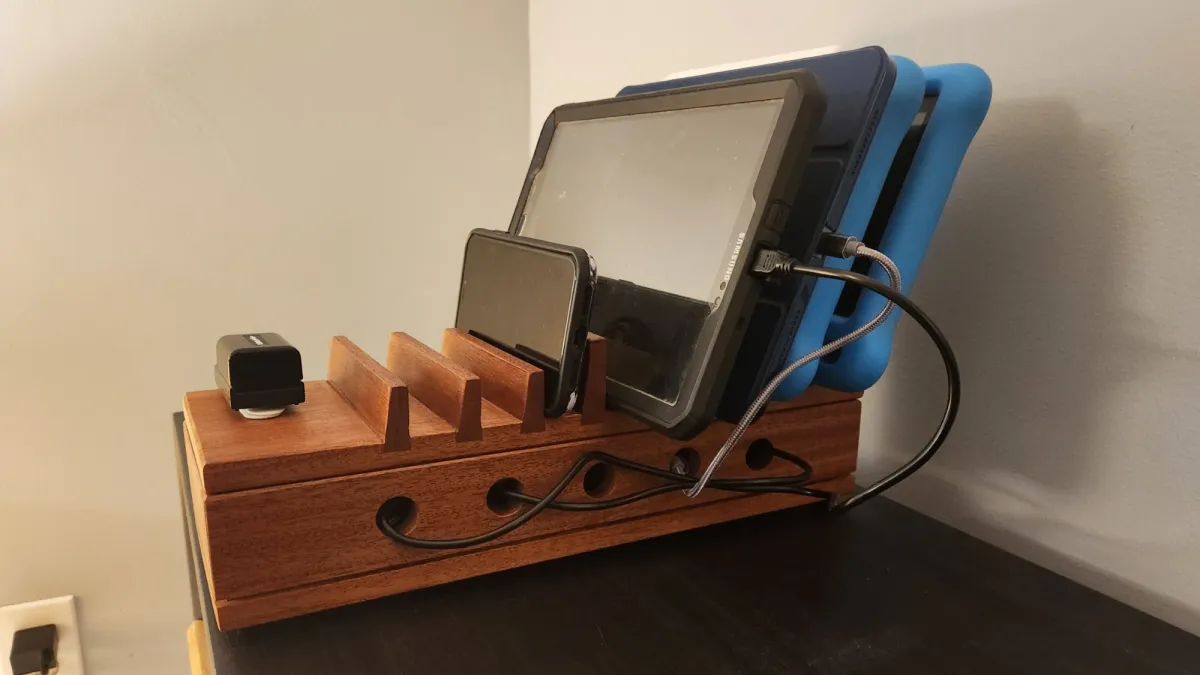
Wood brought a more permanent and refined feel to the setup. Constructing a charging dock from wooden boards allowed for a custom design that fit specific devices perfectly. The process involved measuring each device and spacing out slots to accommodate them comfortably.
Cutting grooves into the wood created slots where phones and tablets could stand upright while charging. Drilling holes behind each slot allowed cables to pass through and connect to a power source hidden beneath or behind the dock. Sanding and finishing the wood gave it a smooth, professional appearance that elevated the entire setup.
This type of station worked well in shared spaces like living rooms or kitchens. It kept devices organized in one place, reducing the chance of losing track of them. The combination of functionality and aesthetics made it a standout project.
Using Drawer Dividers To Hide Cables
Drawers offered a hidden solution that kept surfaces completely clear. By converting a drawer into a charging station, all cables and devices stayed out of sight while remaining easily accessible. This method worked especially well for maintaining a clean and minimalist look.
Installing a power strip inside the drawer provided the necessary connections. Small holes drilled at the back allowed cables to run from the outlet into the drawer without being visible. Adding dividers inside helped separate devices, preventing them from sliding around or getting tangled.
This setup felt seamless because it didn’t disrupt the existing layout of the room. Opening the drawer revealed an organized charging area, while closing it restored the clean appearance of the space. It was a simple yet highly effective way to eliminate cable clutter.
Crafting A Charging Station From A Wooden Crate
Wooden crates offered both storage and style, making them an excellent base for a charging station. Their open structure allowed for easy modifications, and they provided enough space to house multiple devices and cables. With a few adjustments, a crate became a functional and attractive addition to any room.
Turning the crate on its side created compartments that could hold devices while they charged. Adding a shelf inside increased the number of sections, making it easier to organize different items. A power strip placed at the back connected everything while remaining mostly hidden from view.
Painting or staining the crate helped it match the surrounding decor. The natural texture of the wood added warmth, making the station feel like part of the room rather than just a utility piece. It balanced practicality with visual appeal in a way that felt intentional.
Incorporating PVC Pipes For Cable Management
PVC pipes introduced a more unconventional but highly effective approach to organizing cables. Cutting them into short sections created holders that could keep cords separated and easy to access. This method worked well for both charging stations and general cable storage.
Arranging the pipe sections in a box or on a board created a structured layout. Each section held a cable, preventing them from tangling with one another. Labeling or color-coding the sections made it even easier to identify which cable belonged to which device.
This approach felt both practical and creative. It used inexpensive materials in a way that solved a common problem. The flexibility of the design allowed for adjustments based on the number of devices and available space.
Designing A Wall-Mounted Charging Shelf
Wall-mounted solutions helped free up valuable surface space while keeping devices within reach. Installing a small shelf with built-in cable management created a dedicated charging area that didn’t interfere with other furniture. This design worked particularly well in smaller rooms.
Drilling holes into the shelf allowed cables to pass through from a power strip mounted underneath or behind it. Devices rested on the surface while charging, with cords neatly tucked away out of sight. Adding hooks or small compartments enhanced the functionality of the setup.
The elevated design also reduced the risk of spills or accidental damage. It kept electronics safely off the floor and away from crowded surfaces. The clean, organized look made the entire room feel more put together.
Transforming A Book Into A Hidden Charging Station
A hollowed-out book offered a creative and discreet way to hide cables and devices. This approach blended functionality with a touch of novelty, making it both practical and visually interesting. It worked especially well in spaces where a subtle solution was preferred.
Carefully cutting out the center of a thick book created a cavity large enough to hold a small power strip and cables. The cover concealed everything, leaving only the necessary cords visible. Placing the book on a shelf or table made it look like a regular decorative item.
This idea added an element of surprise to the setup. It turned a common object into something functional while maintaining the overall aesthetic of the room. It proved that organization solutions can also be creative and unique.
Adding Cable Clips And Organizers
Small accessories often make a big difference in managing cable clutter. Cable clips and organizers helped keep cords in place, preventing them from slipping behind furniture or tangling together. These additions complemented larger charging stations by enhancing their effectiveness.
Attaching clips to the edges of desks or shelves kept cables within reach at all times. Wrapping excess cord length with ties or Velcro straps reduced clutter and made everything look more organized. These simple adjustments improved the overall functionality of the setup.
Combining these tools with DIY charging stations to eliminate cable mess created a complete system. It ensured that every cable had a place and stayed there. The result was a cleaner and more efficient space.
Personalizing The Design For Different Spaces
Each room has its own needs, and customizing charging stations ensured they fit seamlessly into different environments. A station in the bedroom might prioritize simplicity and minimalism, while one in the living room could focus on accommodating multiple devices. Adjusting the design made it more practical and visually cohesive.
Adding decorative elements helped the station blend into the room’s style. Paint, fabric, or even small accents like handles or labels made each piece feel unique. This level of personalization turned a functional project into something that also enhanced the overall decor.
The flexibility of DIY projects allowed for continuous improvement. As needs changed, the design could be updated or expanded. This adaptability made the solutions more sustainable in the long run.
Maintaining A Clutter-Free Setup
Building a charging station is only part of the process. Maintaining it requires consistent habits and a bit of attention. Regularly checking cables and removing unused ones helps prevent clutter from building up again.
Placing devices back in their designated spots after use becomes easier over time. The structure of the station encourages organization, making it feel natural rather than forced. Small efforts add up, keeping the space tidy and functional.
A well-maintained setup also extends the life of cables and devices. Preventing tangles and unnecessary strain reduces wear and tear. This practical benefit adds even more value to the effort put into creating the station.
Final Thoughts
An organized charging area transforms the way devices are managed on a daily basis. DIY charging stations to eliminate cable mess provide a practical solution that combines creativity with functionality. They show that even simple materials can be turned into effective tools for improving everyday life.
The process of building these stations brings a sense of accomplishment. Each project reflects personal style while addressing a common problem. Over time, these small changes create a more organized and enjoyable living space.
Cable clutter doesn’t have to be a constant frustration. With a bit of effort and imagination, it becomes manageable and even an opportunity for creative expression. The result is a cleaner, more efficient environment that supports daily routines without unnecessary distractions.


